When the task allows, we build industrial control on standard Siemens LOGO! 8 instead of an expensive industrial PLC — cutting initial project cost by more than €2000 (on the control part alone). Delivered in food, woodworking and water treatment.
„Ar tikrai reikia pramonės standarto, jei užduotis paprasta?“
We start from the need and evaluate the actuator in reverse: how complex the motion and logic really are. Where the task allows, we use the reliable but far cheaper Siemens LOGO! 8 — instead of paying for PLC capabilities that this job will never use.
Tą patį principą — teisingai parinktą valdymą su LOGO! — įgyvendinome trijose labai skirtingose vietose:
An industrial PLC isn’t always necessary. For a simple motion sequence or conveyor control, Siemens LOGO! 8 is industrially reliable, quick to program and more than €2000 cheaper on the control part alone. That is a direct saving for the client — with no compromise on reliability.
O kadangi sprendimas paremtas standartiniais komponentais, klientas gali jį prižiūrėti ir plėsti pats, o ne būti pririštas prie uždaros platformos.
Atsiųsk proceso aprašymą ar įrenginio nuotrauką — sąžiningai pasakysime, kas tinka ir kas kainuos mažiau.
Fragmentai iš pjūklo LOGO!Soft Comfort programos — išėjimai į 5/2 skirstytuvus (fiksavimas, nuleidimas) ir signalų mainai tarp tinklo įrenginių.
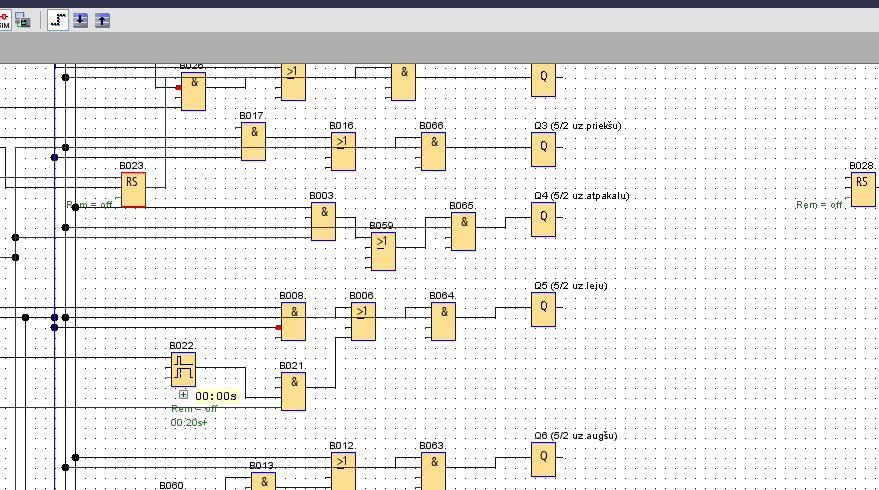
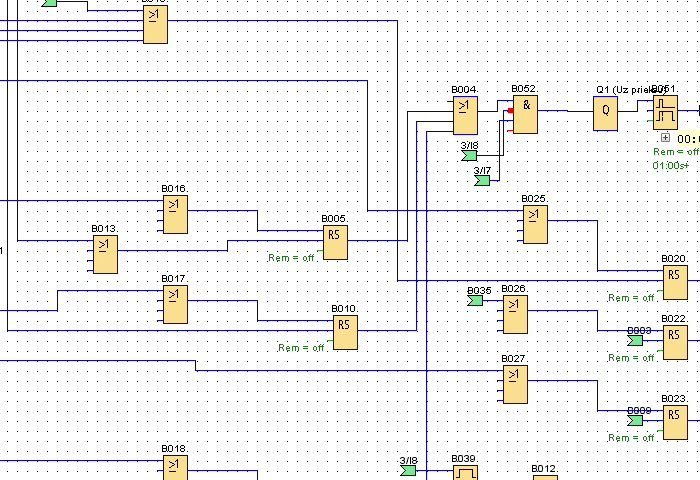
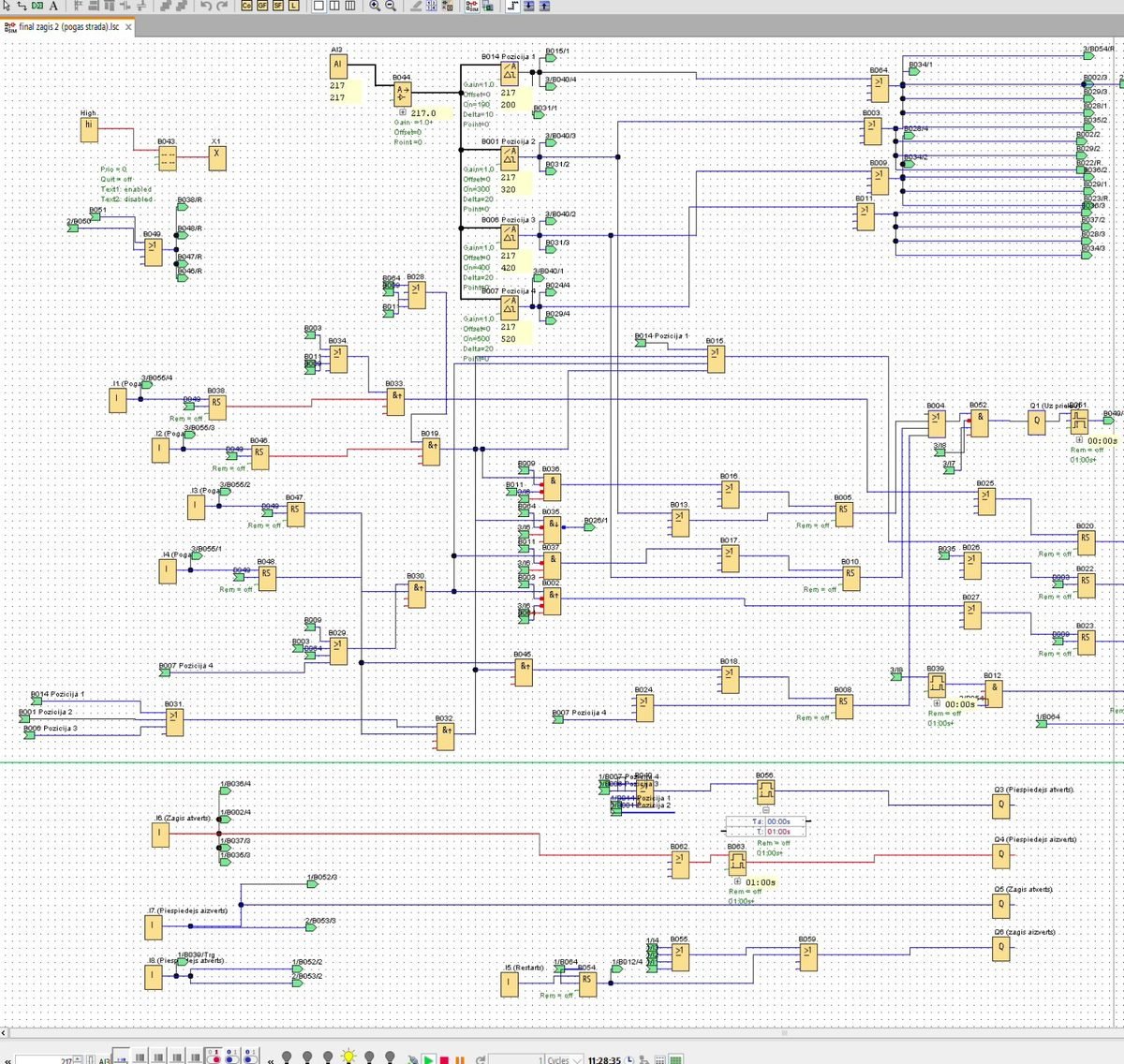
In these projects the control (PLC) part alone became more than €2000 cheaper by using standard Siemens LOGO! 8 instead of an industrial PLC — with no loss of reliability. The exact saving depends on the I/O count and the task.
When the process is large, fast or complex — many axes, fast closed-loop control, safety functions, SCADA networks. Then we choose a PLC. For simple motion sequences, conveyors and pump/valve control, LOGO! is exactly the right size.
Yes — together with a frequency converter (VFD). On the ice-cream line we used this to compensate for chain-length change (from temperature) by adapting conveyor speed and holding correct position and timing.
Yes. We cover the whole chain — assessing the need, choosing the controller, LOGO! programming, supplying pneumatics and VFDs from stock, and commissioning.
